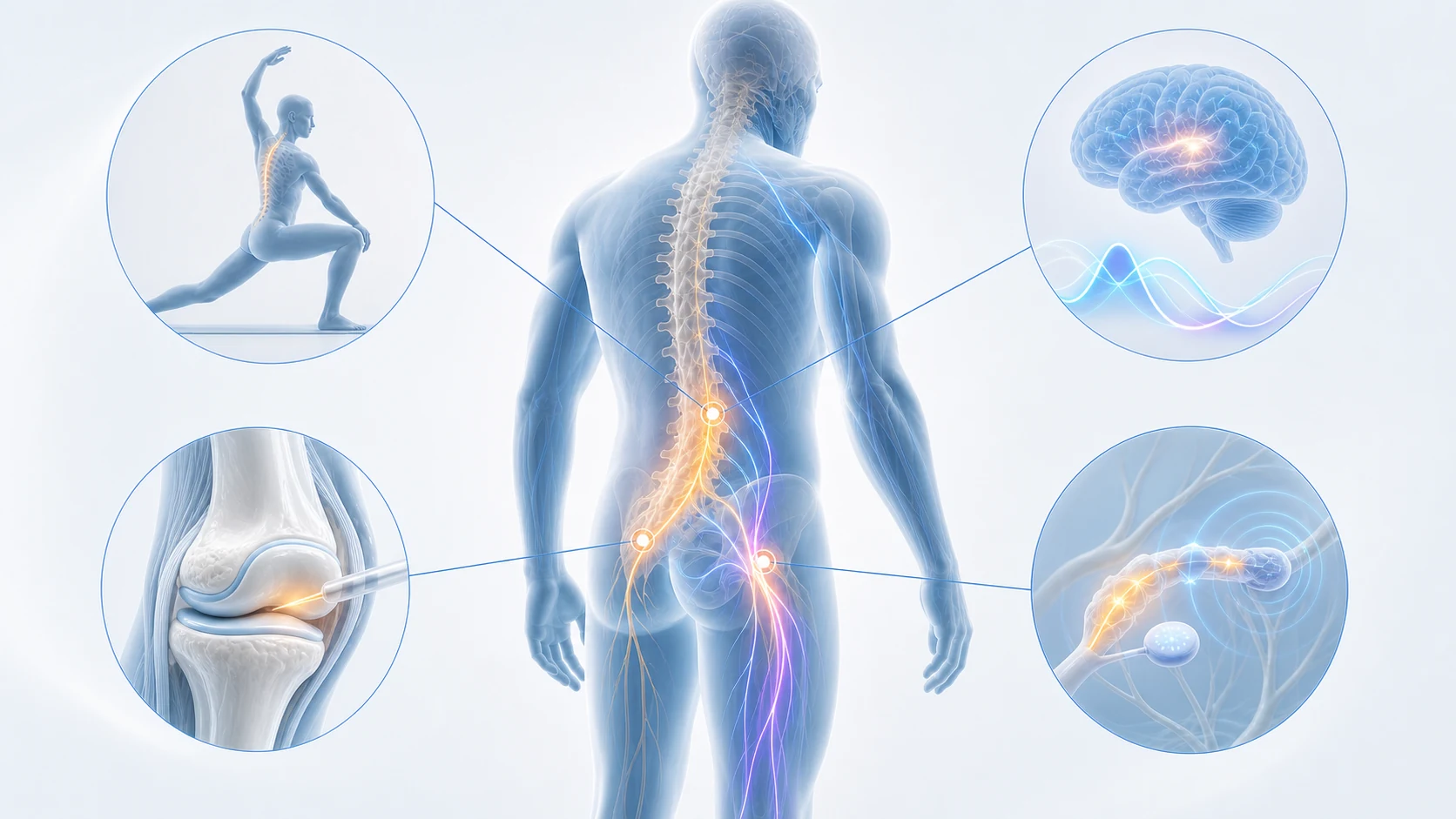
Wanting pain relief without relying entirely on medication is understandable. The encouraging news is that chronic pain care can include movement-based treatment, behavioral skills, targeted injections or procedures, and neuromodulation. The right choice depends on the diagnosis, goals, health history, and evidence for the specific condition.
“Drug-free” does not mean that medication is wrong or that one therapy works for everyone. It means building a broader plan so medication is not the only tool. A pain specialist can help identify which options are reasonable and which claims are unlikely to help.
Start by Identifying the Pain Generator
Back, joint, and nerve pain can feel similar even when they come from different structures. A treatment aimed at inflammation may not help pain caused by mechanical compression, while a spine procedure will not solve every muscular problem.
A focused evaluation looks at when symptoms began, where they travel, which activities change them, and what examination or imaging findings mean. The goal is not to order every test. It is to narrow the possibilities and match care to the most likely source.
This step prevents a common frustration: cycling through unrelated treatments without a clear reason for choosing them.
It also helps identify situations that need another kind of care. New loss of bowel or bladder control, major weakness, fever with severe spinal pain, or pain after a significant injury should be evaluated promptly rather than managed as routine chronic pain.
Nonprocedural Options Can Improve Function
For many conditions, a sustainable plan begins with conservative strategies. Depending on the diagnosis and the person, useful options may include:
- Physical therapy and a gradually progressed home exercise program
- Strength, mobility, pacing, and body-mechanics training
- Cognitive behavioral therapy or other pain-coping skills
- Mindfulness, relaxation, yoga, tai chi, or acupuncture when appropriate
- Sleep, nutrition, and activity changes that support recovery
Evidence varies by condition, and “natural” does not automatically mean safe. Discuss complementary approaches and supplements with your clinicians, particularly if you are pregnant, take blood thinners, or have other medical conditions.
Targeted Interventional Treatments
When conservative care is not enough, targeted treatment may address a specific structure or nerve while limiting whole-body medication exposure. Examples include diagnostic nerve blocks, image-guided injections, and minimally invasive decompression for selected patients.
PRP therapy uses a preparation made from the patient’s own blood and has stronger evidence for some tendon problems and mild-to-moderate knee osteoarthritis than for many other conditions. The mild® procedure is designed for certain people with lumbar spinal stenosis and neurogenic claudication caused partly by thickened ligament tissue.
Every procedure has limitations and risks. “Minimally invasive” does not mean risk-free, and a consultation should include alternatives and expected recovery.
Neuromodulation and a Layered Plan
Neuromodulation changes how pain signals are transmitted. Peripheral nerve stimulation targets a particular nerve, while spinal cord stimulation acts on broader pain pathways. Some systems are temporary; others involve a trial before a long-term implant is considered.
The most effective plan is often layered: movement and self-management remain important while a targeted treatment reduces a barrier to activity. Progress should be measured not only by a pain score but also by sleep, walking, work, and the activities that matter to you.
Give each part of the plan a clear purpose and review point. If a therapy does not improve the agreed goal after an appropriate trial, that is useful information—not a personal failure. The plan can be adjusted instead of continuing an ineffective treatment indefinitely.
Frequently Asked Questions


