
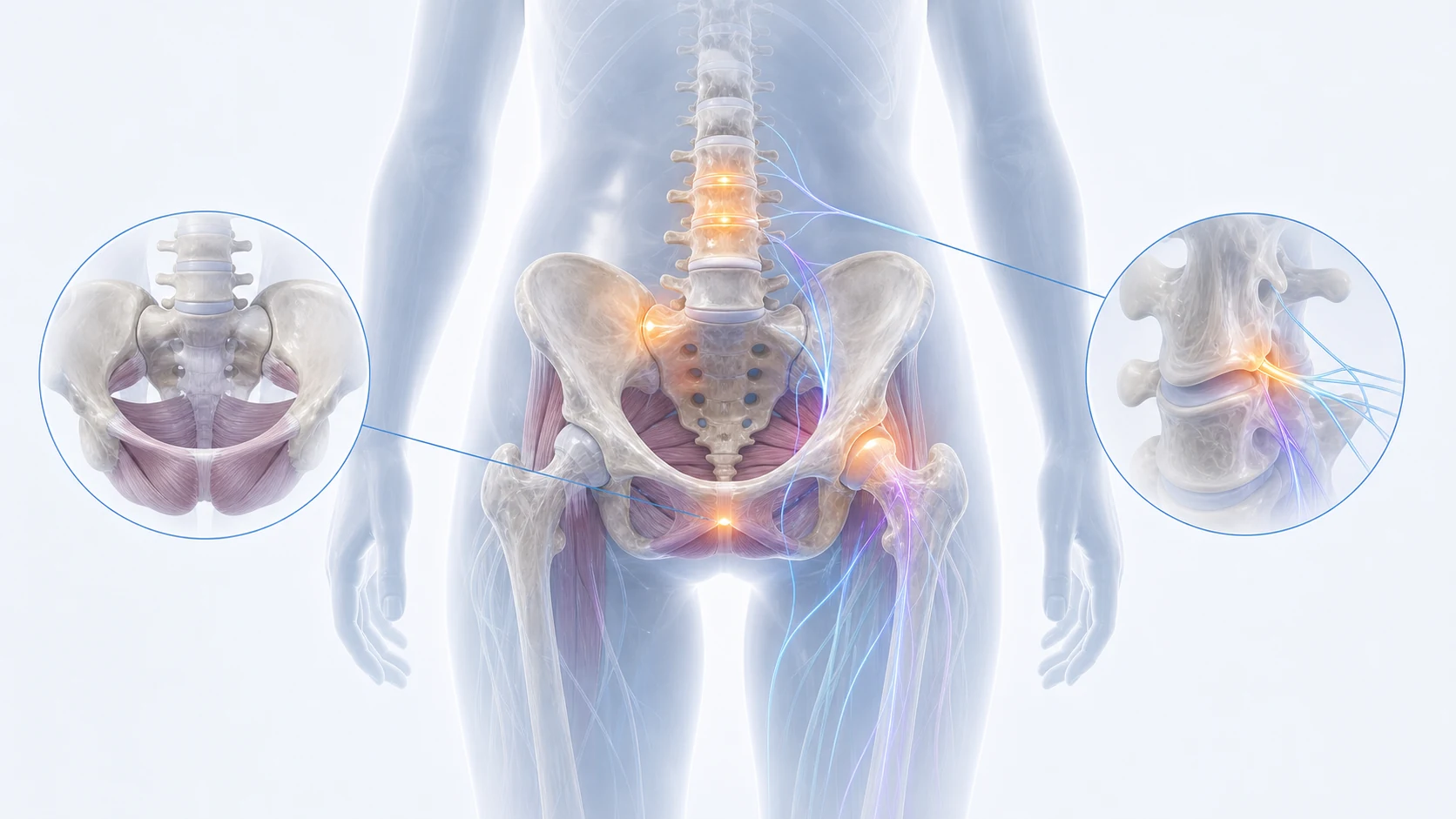
Pelvic pain is not limited to one gender or one organ system. It may involve the bladder, bowel, reproductive organs, prostate, pelvic-floor muscles, spine, hips, joints, or nerves. Some people have more than one contributor, which can make the path to a diagnosis frustrating.
Persistent pain is real even when an initial test is normal. A useful evaluation looks at the pattern of symptoms, their effect on daily life, and which specialists need to work together. Treatment can then focus on the identified cause while also reducing nerve and muscle sensitivity.
Common Sources of Pelvic Pain
In women, possible causes include endometriosis, painful bladder syndrome, pelvic inflammatory disease, fibroids, ovarian problems, bowel disorders, and pelvic-floor dysfunction. In men, chronic prostatitis/chronic pelvic pain syndrome, urinary problems, pelvic-floor dysfunction, hernia, bowel conditions, and nerve irritation may contribute.
People of any gender can develop pain related to:
- Pelvic-floor muscles that remain tight or do not coordinate normally
- Irritation of the pudendal, ilioinguinal, genitofemoral, or other nerves
- Hip, sacroiliac, abdominal-wall, or lower-spine problems
- Prior surgery, injury, infection, or scar sensitivity
- Bladder or bowel conditions
The location alone does not prove which structure is responsible.
Clues That a Nerve May Be Involved
Nerve-related pelvic pain may feel burning, electric, shooting, tingling, or unusually sensitive to light touch. It can follow a recognizable path into the groin, genital region, lower abdomen, buttock, or upper thigh. Sitting, clothing pressure, movement, bladder or bowel activity, or sexual activity may change the symptoms.
A diagnostic ultrasound-guided ilioinguinal nerve block can sometimes help determine whether a particular nerve contributes to groin pain. A block is not a universal test for pelvic pain, and the result must be interpreted with the history and examination.
A Multidisciplinary Evaluation
Because the pelvis contains several organ systems and complex muscles and nerves, care may involve primary care, gynecology, urology, gastroenterology, pelvic-floor physical therapy, and pain medicine. Your clinician may ask about urinary and bowel symptoms, menstrual or sexual symptoms when relevant, previous operations, back or hip pain, and trauma history in a respectful, private way.
A short symptom diary can make the visit more productive. Record where the pain occurs, how it feels, whether sitting or movement changes it, and whether it relates to urination, bowel movements, meals, menstruation, or sexual activity. Note numbness, tingling, fever, bleeding, or other associated symptoms without trying to diagnose the cause yourself.
Seek urgent medical evaluation for sudden severe pelvic or abdominal pain, fainting, heavy bleeding, fever with worsening pain, pregnancy-related pain, inability to urinate, a painful swollen testicle, new major weakness, or loss of bowel or bladder control.
Treatment Options Are Matched to the Cause
Treatment may include pelvic-floor physical therapy, gradual movement, bladder or bowel care, medications, behavioral pain skills, treatment of an underlying gynecologic or urologic condition, or targeted injections. When a specific peripheral nerve remains a major pain generator, peripheral nerve stimulation may be discussed in selected cases.
Oregon Pain & Spine’s pelvic pain evaluation focuses on musculoskeletal and nerve-related contributors while coordinating with other specialists when symptoms point to another organ system. The aim is a practical plan that improves function and respects the complexity of the condition.
Improvement may be gradual because several contributors can reinforce one another. A staged plan makes it easier to tell which treatment helps and avoids assuming that a single procedure must solve every symptom.
Frequently Asked Questions


