
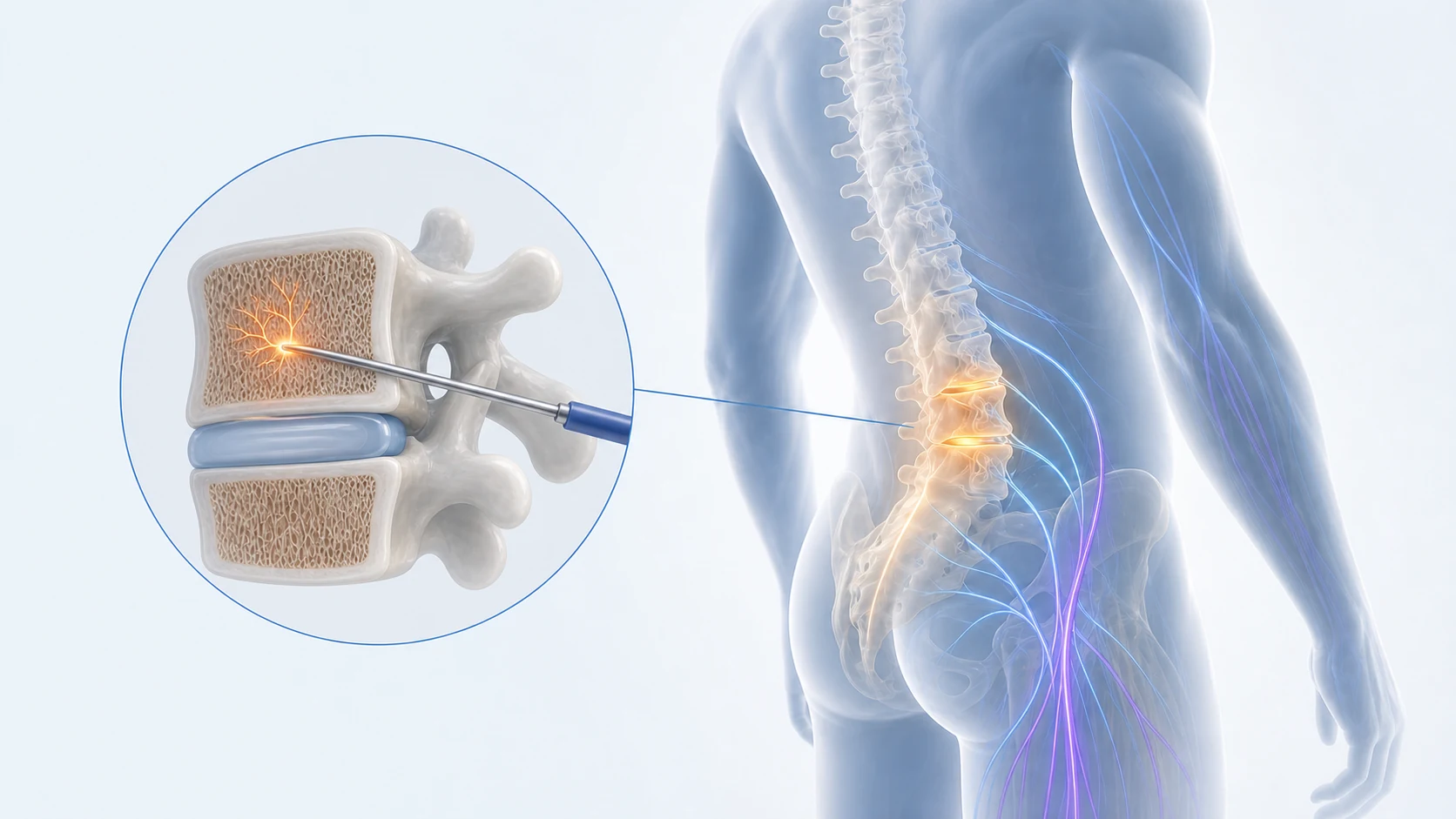
Chronic low back pain does not always begin in a disc, muscle, or pinched nerve. For some people, pain signals come from damaged vertebral endplates—the structures between a spinal disc and the vertebral bones above and below it. This pattern is called vertebrogenic pain.
The Intracept® procedure is a minimally invasive treatment designed for a carefully selected group of people with vertebrogenic pain. It targets the basivertebral nerve inside the vertebral body rather than placing an implant in the spine. Understanding the diagnosis and selection process is essential because Intracept is not intended for every type of back pain.
Why Vertebral Endplates Can Become Painful
Vertebral endplates help transfer load between the discs and vertebral bones. Aging, repeated stress, or degeneration may damage these endplates and trigger inflammation. The basivertebral nerve carries pain signals from this area.
Vertebrogenic pain is often felt in the center of the lower back and may extend into the buttocks. Sitting, bending forward, or lifting may aggravate it, although symptoms alone cannot establish the diagnosis. A specialist combines the history and examination with MRI findings. Type 1 or Type 2 Modic changes near the endplates can support the diagnosis.
Other problems—including facet-joint pain, nerve-root irritation, sacroiliac pain, and muscular pain—can feel similar. That is why a source-focused evaluation matters before considering basivertebral nerve ablation.
Who May Be Considered for Intracept
The FDA-cleared indication describes adults with chronic low back pain lasting at least six months who have not improved after at least six months of conservative care and whose MRI shows qualifying Type 1 or Type 2 Modic changes from L3 through S1. A clinician must still determine whether the symptoms and imaging fit together.
Evaluation commonly considers:
- Where the pain is located and which activities make it worse
- How long symptoms have persisted
- Which nonsurgical treatments have already been tried
- MRI evidence of vertebral endplate changes
- Whether another condition better explains the pain
People with primarily radiating leg pain, certain infections, severe bone fragility, or other medical concerns may need a different approach. Individual eligibility and insurance requirements vary.
What Happens During the Procedure
Intracept is generally performed as an outpatient procedure. Using imaging guidance, the physician creates a small pathway into the targeted vertebral body. A specialized radiofrequency probe is positioned near the basivertebral nerve and applies controlled heat to interrupt its ability to transmit pain signals. The instruments are removed, and no permanent device remains behind.
The number of vertebral levels treated, anesthesia plan, and recovery instructions depend on the individual. Temporary soreness around the access site can occur. As with any procedure, risks may include bleeding, infection, nerve injury, fracture, worsening pain, or failure to improve. Your physician should review risks that apply to your health and anatomy.
Deciding Whether It Fits Your Back Pain
A procedure should follow a diagnosis—not replace one. Bring prior imaging, a list of treatments you have tried, and examples of the activities your pain limits. Useful questions include which findings point to vertebrogenic pain, what alternatives remain, what improvement would be meaningful to you, and what recovery restrictions to expect.
Oregon Pain & Spine evaluates chronic back pain by looking for the structure or nerve most likely to be generating symptoms. If your examination and MRI suggest vertebrogenic pain, the team can explain whether Intracept belongs among your options.
Frequently Asked Questions


