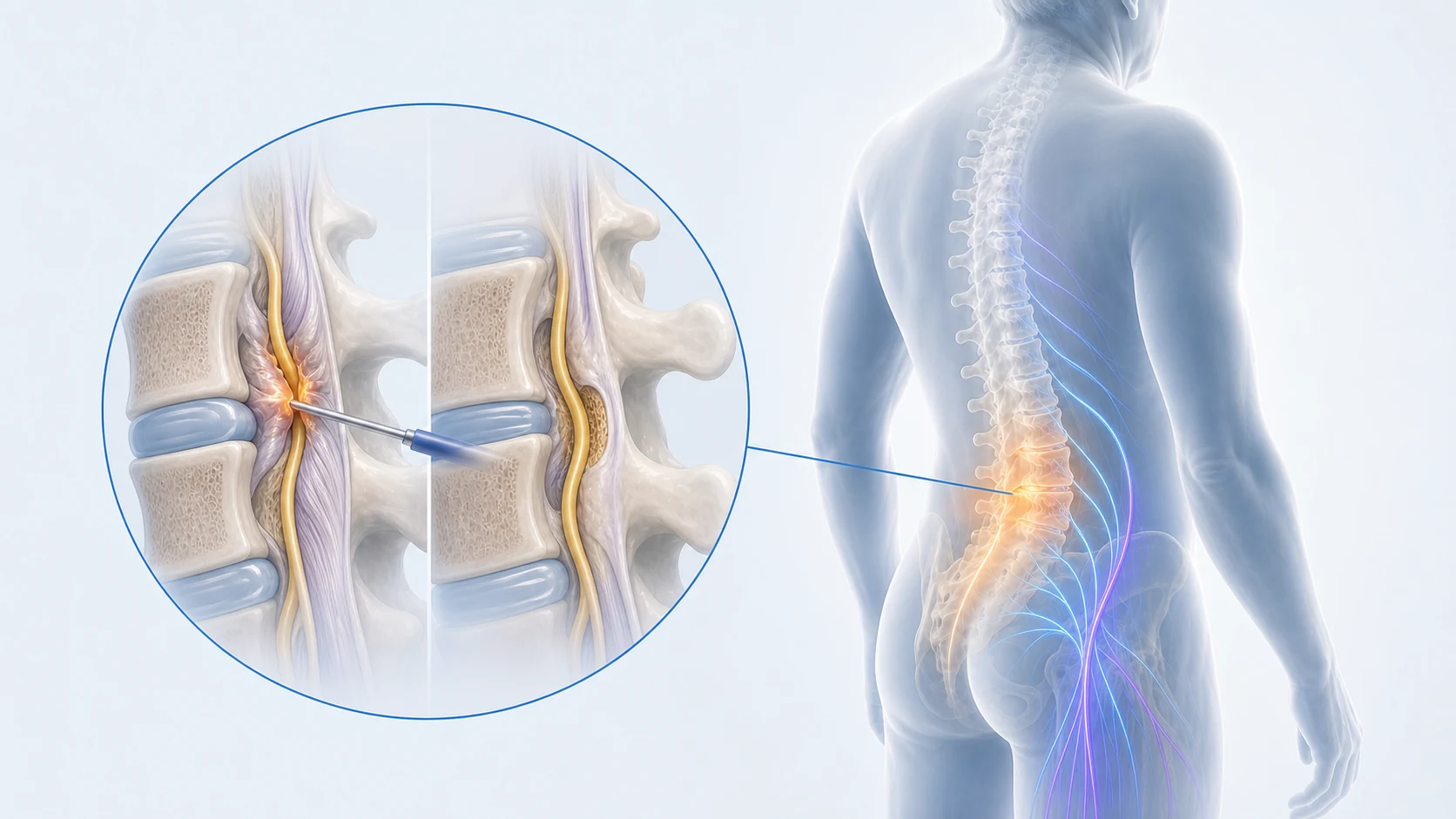
Lumbar spinal stenosis narrows the space available for nerves in the lower spine. A common result is neurogenic claudication—heaviness, aching, numbness, or weakness in the buttocks or legs that appears with standing or walking and improves when sitting or leaning forward.
For selected patients, the mild® procedure can reduce one contributor to that narrowing without an open surgical exposure or permanent implant. Its full name is minimally invasive lumbar decompression. It is not appropriate for every cause of stenosis, so symptoms and imaging must be reviewed together.
Why Standing and Walking Can Trigger Symptoms
The spinal canal may become narrower as discs, joints, and ligaments change with age. One possible contributor is a thickened ligamentum flavum, a ligament along the back of the spinal canal. Standing upright can reduce the available space further, while sitting or bending forward often opens it temporarily.
Patients sometimes describe needing a shopping cart, stopping frequently, or choosing a seat before leg symptoms begin. Similar complaints can come from vascular disease, hip problems, neuropathy, or other spinal conditions. A careful evaluation helps separate these possibilities.
How the mild Procedure Creates More Space
The procedure is performed through a small access point using X-ray guidance. Specialized instruments remove small portions of bone and excess ligament tissue to increase space in the spinal canal. The physician does not place screws, rods, or a spacer, and no permanent implant remains.
mild is generally performed in an outpatient setting with local anesthetic and sedation determined by the care team. It is different from an open laminectomy, although both approaches are intended to decompress neural structures. The amount and location of tissue treated depend on imaging and anatomy.
It is also different from an epidural injection. An injection places medication near irritated nerves to reduce inflammation; mild mechanically removes a limited amount of tissue contributing to the narrowing. One treatment is not automatically “better”—the diagnosis and treatment goals determine which option makes sense.
Risks can include bleeding, infection, nerve injury, dural puncture, worsening symptoms, or failure to improve. Your physician should explain how these risks apply to you.
Who May Be a Candidate
Evaluation generally looks for symptoms of neurogenic claudication and imaging evidence that a thickened ligamentum flavum contributes to lumbar stenosis. Candidates have often tried conservative care such as activity modification, therapy, or a lumbar epidural steroid injection without adequate lasting improvement.
Important considerations include:
- How far or how long you can stand and walk
- Whether sitting or leaning forward relieves symptoms
- Which spinal levels are narrowed and why
- Prior spine procedures and overall medical health
- Whether another condition better explains the limitations
Recovery and Measuring Progress
Many people return home the day of the procedure, but restrictions and recovery timing vary. Temporary soreness at the access site can occur. Follow the written instructions for activity, bathing, medications, and warning signs, and keep scheduled follow-up visits.
Meaningful progress may include standing longer, walking farther, needing fewer breaks, or participating more fully in daily activities. If symptoms remain severe, a specialist can discuss other options, which may include rehabilitation, injections, minimally invasive spacers, surgical evaluation, or a spinal cord stimulator trial when the pain pattern and history support it.
Keep expectations tied to function rather than a guarantee of being pain-free. Nerves may take time to settle, and other causes of back or leg pain can remain even when the targeted narrowing has been addressed.
Frequently Asked Questions


