
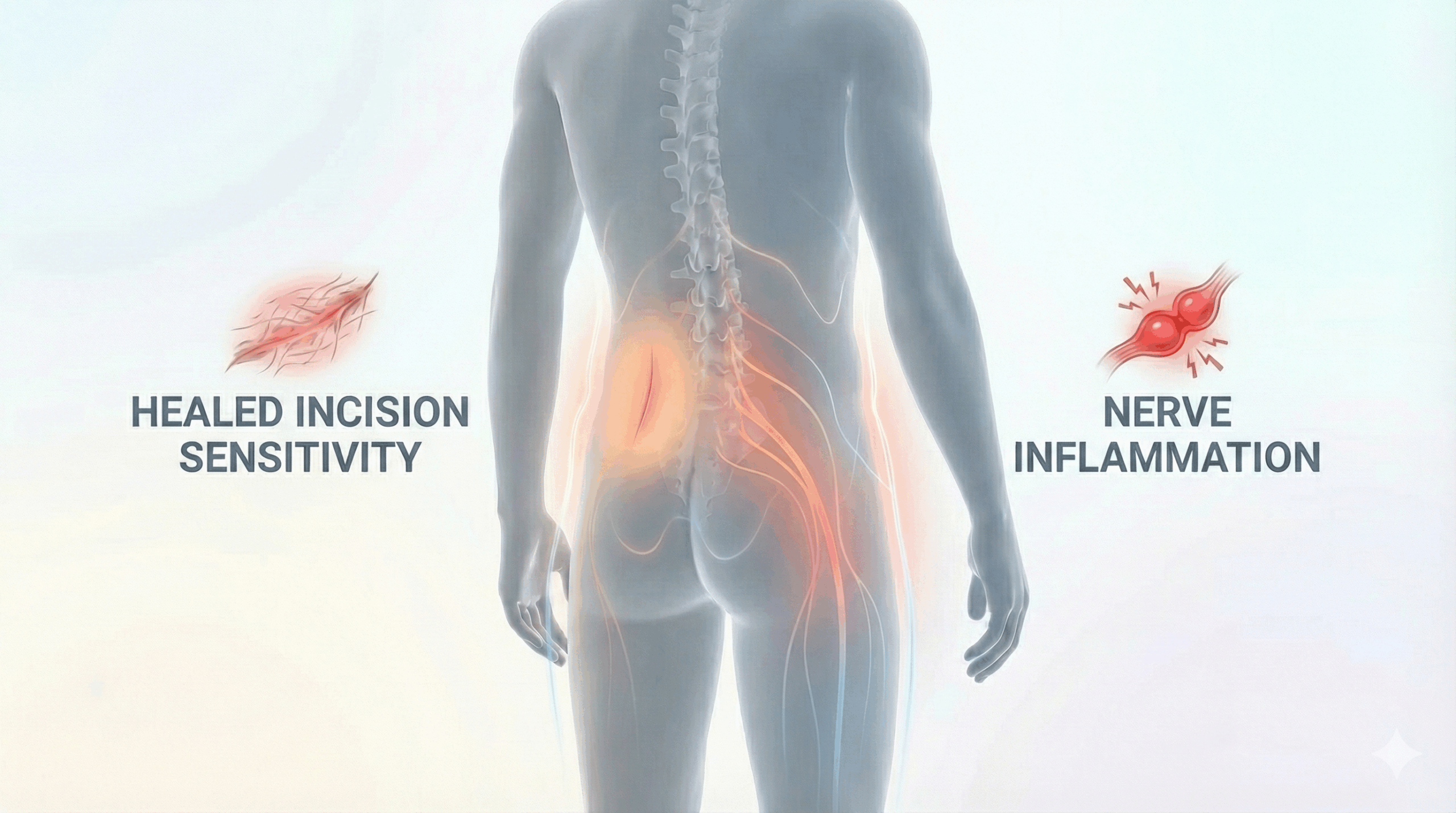
Most people expect pain to steadily improve after surgery. For many, that’s exactly what happens. But for others, pain lingers far longer than expected—sometimes months, sometimes years. When that occurs, it can feel confusing and discouraging, especially if you were told the surgery would relieve your symptoms.
Chronic post-surgical pain is more common than most people realize, and it has real, diagnosable causes. More importantly, there are modern treatments that can help. This guide explains why pain sometimes persists after surgery, what it means when symptoms don’t improve, and how interventional pain specialists can help you move forward.
Why Pain Sometimes Persists After Surgery
Surgery can correct a problem, but it also creates unavoidable stress on tissues and nerves. In most cases, these tissues heal normally and pain fades. When pain continues beyond three months—and especially if it feels different from early healing pain—there may be identifiable causes.
Nerve irritation or nerve injury: During surgery, nerves may be stretched, compressed, or inflamed. Even small nerves can become hypersensitive afterward, leading to burning, shooting, or radiating discomfort.
Scar tissue around nerves: Scar tissue, or adhesions, can form near healing tissues. When it surrounds a nerve, it may restrict movement or increase sensitivity.
Changes in biomechanics: After a spinal fusion, knee replacement, or other structural surgery, the body moves differently. These changes can place new stress on adjacent joints or tissues.
Inflammation that never fully settles: Persistent inflammation at or near the surgical site can irritate nerves and surrounding tissues long after the expected healing window.
Common Surgeries Linked to Ongoing Pain
Chronic pain can develop after many procedures, but it is especially common after:
Spine surgery: Some patients develop post-laminectomy pain or ongoing nerve irritation from inflammation, scar tissue, or changes in spinal mechanics.
Joint replacement: Hip and knee replacements generally work well, but inflammation, nerve irritation, or soft-tissue stress may cause lingering pain.
Abdominal or pelvic surgery: Nerves in the abdomen or pelvic region can become irritated, leading to burning or hypersensitive pain near the incision.
Thoracic or chest surgery: Intercostal nerves running between the ribs may be affected, sometimes resulting in chronic chest-wall or underarm pain.
How Interventional Pain Medicine Can Help
Modern pain care focuses on precision: identifying which nerve or structure is responsible and treating it directly.
Targeted nerve blocks can help determine which nerve is involved and may provide relief by calming inflammation.
Minimally invasive treatments for nerve pain may be considered when a specific nerve remains irritated. For selected patients, dorsal root ganglion (DRG) stimulation regulates pain signaling in a focused region.
Evaluation for post-laminectomy pain can determine whether symptoms after spine surgery are linked to inflammation, scar tissue, altered mechanics, or irritated nerve roots—each with its own treatment pathway.
Peripheral nerve stimulation may be discussed when chronic pain can be traced to a targetable nerve outside the spinal canal. The choice depends on the diagnosis, prior treatment response, health history, and goals.
When to Seek Expert Evaluation
You do not need to “wait it out” indefinitely if pain no longer feels like normal healing. A consultation is recommended when:
- Pain lasts longer than three months
- Pain worsens instead of improving
- You feel burning, shooting, or electrical sensations
- The area is overly sensitive to touch or temperature
- Movement feels restricted by tightness or pulling
- Pain spreads beyond the incision area
- Numbness or tingling develops
A pain specialist can compare the symptom pattern with the surgery performed, examine the affected nerves and joints, and decide whether imaging or a diagnostic procedure is appropriate. The goal is a specific explanation and a measured path forward, not an assumption that every symptom requires another operation.
Frequently Asked Questions


