
Sacroiliac Joint Fusion (Vyrsa)

Adam Kemp, MD
Specialty: Interventional Pain Medicine & Anesthesiology
Experience: Compassionate Care, Cutting-Edge Treatments, Drug-Free Focus

Sacroiliac Joint Fusion (Vyrsa)

What is Sacroiliac Joint Dysfunction and Pain?
Sacroiliac joint pain is a condition where you experience discomfort in the joints that connect the sacrum (the triangular bone at the base of your spine) to the ilium (part of your pelvis). These joints help support your upper body and transfer weight to your legs. When these joints become inflamed or irritated, it can cause pain in the lower back, buttocks, and even down the legs. This pain can be worsened by activities such as standing, walking, or climbing stairs.
How common is sacroiliac joint pain?
Low back pain (LBP) is among the most common human health problems, with a global prevalence of 9.4% and a yearly prevalence of 38%. It and accounts for half of years lived with disability (YLD) due to a musculoskeletal disorder worldwide. In fact, the Sacroiliac Joint has been estimated to contribute to pain in 10–38% of patients experiencing low back pain.
How do SI Joints become painful?
SI joint pain can arise from dysfunction, inflammation, or trauma affecting the sacroiliac joints. Structural issues, imbalances in the spine or pelvis, and certain medical conditions may place abnormal stress on the SI joints, leading to pain.
The pain is typically felt in the lower back and buttocks, worsened by certain activities, and a comprehensive evaluation by a healthcare professional is needed for accurate diagnosis and appropriate treatment.
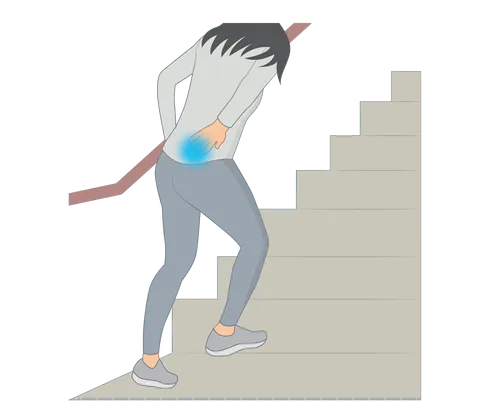
Pain in the lower back when walking up stairs. 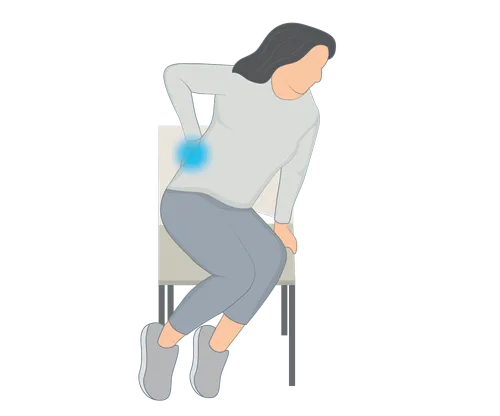
Pain in the lower back while sitting down. 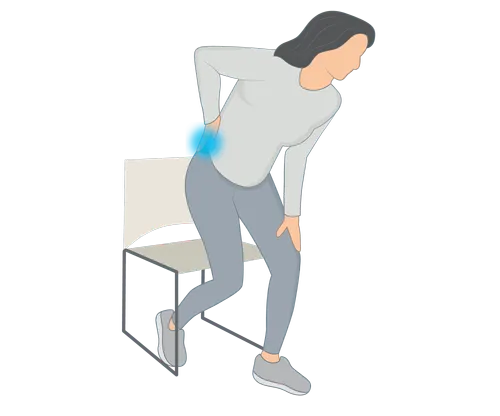
Pain in the lower back while standing up. 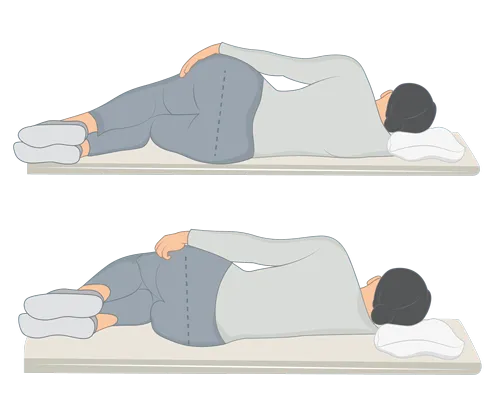
Pain in the lower back while sleeping on one side.
Why Choose SI Joint Fusion with VYRSA™?
Patients may consider minimally invasive SI joint fusion as a treatment option for pain relief because it offers several advantages. This approach involves smaller incisions, reduced tissue trauma, quicker recovery time, and potential for long-term pain relief by stabilizing the joint and promoting fusion, thus addressing the underlying cause of the pain.
Pain Conditions
Explore Treatment Options Based On Your Pain Condition
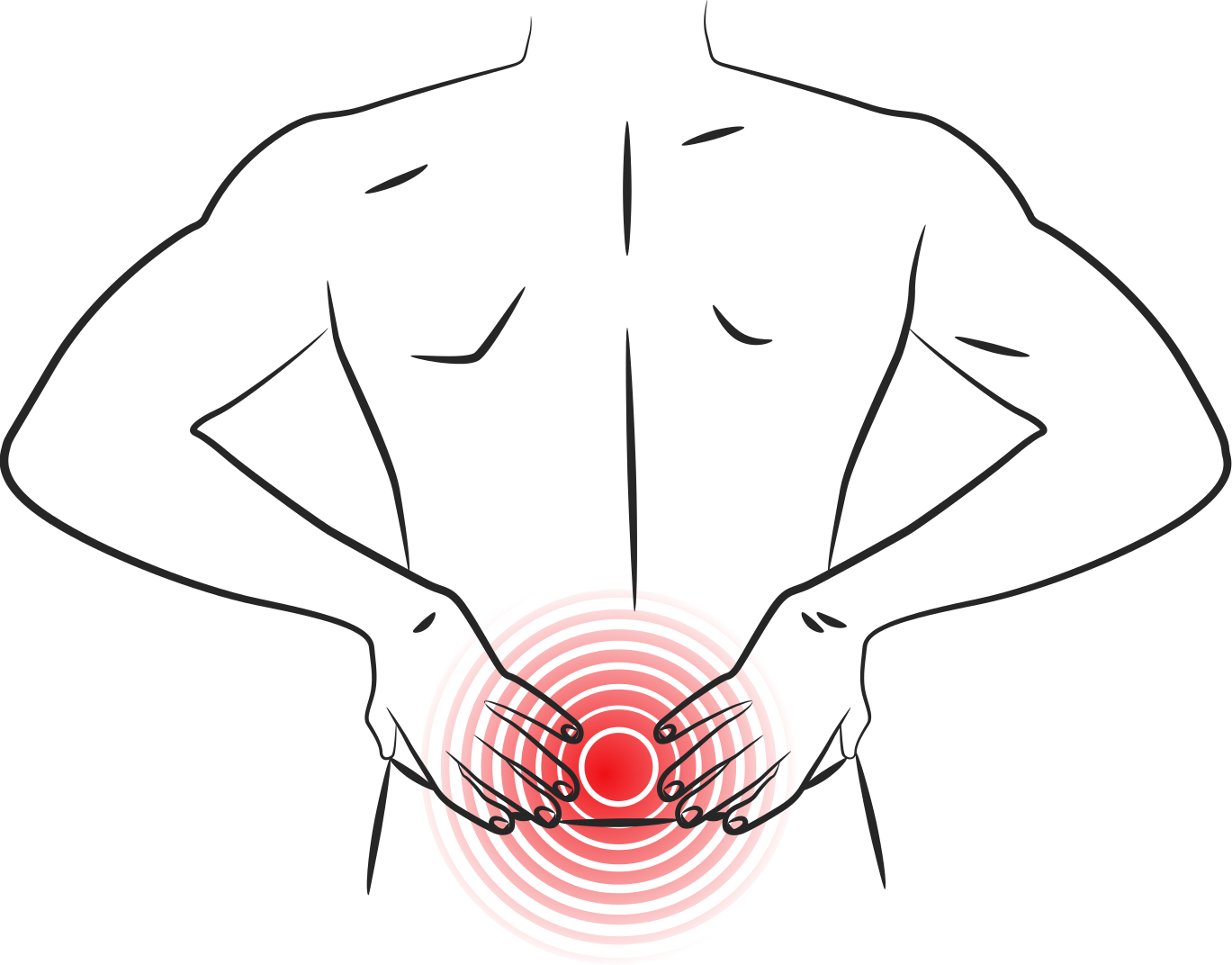
Back Pain
Learn Moreabout Back Pain
Leg Pain
Learn Moreabout Leg Pain
Hip Pain
Learn Moreabout Hip Pain
Foot Pain
Learn Moreabout Foot Pain
Upper Limb & Neck
Learn Moreabout Upper Limb & Neck
Headaches & Migraines
Learn Moreabout Headaches & Migraines
Pelvic Pain
Learn Moreabout Pelvic Pain
Abdominal Pain
Learn Moreabout Abdominal Pain
Our Services
Click Below For More Information
- Basivertebral Nerve Ablation (BVN)
- Caudal Epidural Steroid Injection
- Cervical Facet Joint Syndrome
- Cervical Facet Radiofrequency Neurotomy
- Cluneal Nerve Block
- Coccydynia
- Complex Regional Pain Syndrome (CRPS)
- Dorsal Root Ganglion Stimulation Therapy (DRG Stimulation)
- Epidural Steroid Injection (ESI) in the Cervical Spine
- Facet Joint Injections
- Intracept™ Procedure
- Lumbar Epidural Steroid Injection (without contrast)
- Lumbar Transforaminal Epidural Steroid Injection
- Medial Branch Block
- Mild® Procedure (Vertos Medical)
- Peripheral Nerve Stimulation (Nalu)
- Peripheral Neuropathy
- Post-Laminectomy Syndrome
- PRP Therapy (Overview)
- Sacroiliac Joint Fusion (Vyrsa)
- Spinal Cord Stimulation (Nalu)
- Spinal Cord Stimulator Implant
- Spinal Cord Stimulator Implant (Trial Procedure)
- SPRINT Peripheral Nerve Stimulation (PNS)
- Superion® InterSpinous Spacer (Vertiflex)
- Tapering Opioid Use Safely
- Thoracic Epidural Steroid Injection
- Ultrasound-Guided Ilioinguinal Nerve Block
- Ultrasound-Guided Injection for Knee Pain
- Wireless Peripheral Nerve Stimulation