
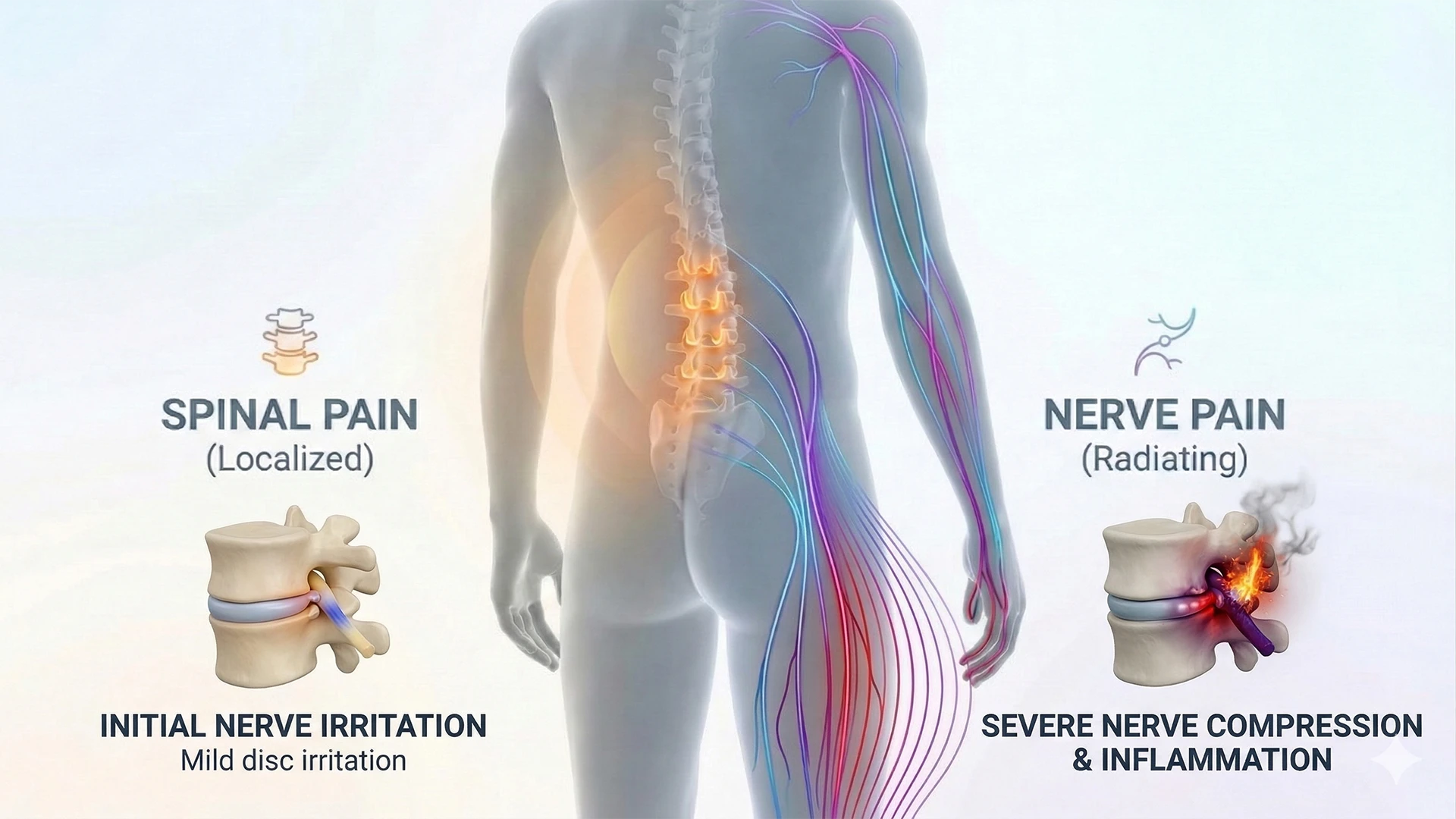
When a “Pinched Nerve” Becomes Something More Serious
A “pinched nerve” is a phrase many people use when they feel sharp pain, tingling, or numbness in the back, neck, or limbs. In many cases, the irritation improves with time, stretching, or rest.
Sometimes what begins as localized soreness or mild nerve irritation can signal something more significant. When symptoms last longer than expected or begin to interfere with daily activities, it may indicate ongoing nerve compression or inflammation rather than temporary irritation. Recognizing this distinction can help determine when it is appropriate to seek medical evaluation.
What a Pinched Nerve Actually Means
A nerve becomes “pinched” when surrounding tissues press on it. These tissues may include:
- Discs between vertebrae
- Bone spurs from arthritis
- Ligaments
- Muscles or tendons
- Swollen tissue from inflammation
This pressure disrupts the nerve’s ability to transmit signals normally. The result can be pain, numbness, tingling, or weakness. Many mild cases gradually resolve as inflammation decreases. However, in some cases, inflammation can act like a chemical fire, causing localized swelling that further narrows the space around the nerve. This can increase irritation and lead to pain that does not easily improve on its own.
Symptoms That Suggest Nerve Compression
People describe nerve-related pain in several ways. Common symptoms include:
- Sharp or shooting pain
- Burning or electric sensations
- Numbness in the arms or legs
- Tingling or “pins and needles”
- Muscle weakness
- Pain that travels along a specific pathway
For example, compression of a lumbar nerve root may cause pain that starts in the back and travels down the leg. This pattern is often associated with the term “sciatica.”
When a Pinched Nerve Becomes More Serious
A temporary nerve irritation usually improves within several weeks. Evaluation is recommended if symptoms:
- Last longer than four to six weeks
- Worsen instead of improving
- Spread into the arms or legs
- Cause muscle weakness
- Interfere with sleep or daily activities
Persistent symptoms may indicate conditions such as disc herniation, spinal stenosis, or chronic nerve inflammation. Timely evaluation allows physicians to identify the exact source of compression and recommend targeted treatment.
Treatment Options for Persistent Nerve Pain
Modern interventional pain care focuses on identifying the specific nerve involved and addressing the cause of irritation. Treatment approaches depend on the cause and may include:
- Targeted steroid injections to calm inflammation
- Nerve blocks to correctly identify the specific pain generator
- Minimally invasive procedures to relieve compression
- Neuromodulation techniques when nerves remain hypersensitive
The goal is to identify and treat the underlying cause in order to improve function and overall quality of life.
When to Seek Evaluation
A consultation with a pain specialist may help if:
- Nerve pain limits daily activity
- Symptoms persist despite conservative care
- Numbness or weakness develops
- Pain travels down the arm or leg
Identifying the source early can help prevent long-term nerve irritation and support recovery.


